

Sign Ons

  • AccessPlus
  • CyMail
  • Outlook
  • Blackboard
  • CyBox
  • CyHire
  • SharePoint
College of Engineering
Engineering Research Institute

ERI Funding Opportunities

Welcome to the ERI Funding Opportunities Site

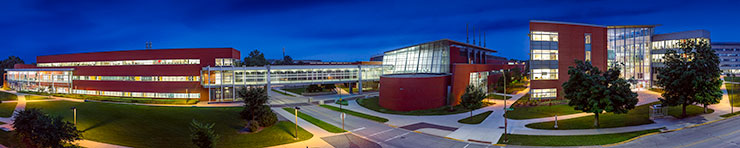
College of Engineering campus
Research drives excellence in the College of Engineering by serving as a magnet to attract and retain outstanding faculty and students. Funding opportunities relevant to the College of Engineering will be posted here. If you are interested in pursuing any of these opportunities please contact ERI at eri-pre@iastate.edu for assistance or additional information. New opportunities are posted weekly. To have the new opportunities delivered directly to your inbox please subscribe using your ISU email address. One email per week.


Substance Research and Training Program

NIH

Solicitation: RFA-ES-27-004

https://www.grants.gov/search-results-detail/359650

Posted Date: May 19, 2026

Proposal Due Date: September 25, 2026

The National Institute of Environmental Health Sciences (NIEHS) is announcing the continuation of the Superfund Hazardous Substance Research and Training Program, referred to as Superfund Research Program (SRP) Centers. SRP Center grants will support problem-based, solution-oriented research Centers that consist of multiple, integrated projects representing both the biomedical and environmental science and engineering disciplines; as well as cores tasked with administrative (which includes Center leadership, data management, and training); translational research and engagement; and research support functions. The scope of the SRP Centers is taken directly from the Superfund Amendments and Reauthorization Act of 1986, which limits competition for this program to accredited institutes of higher education.Please see Section III. Eligibility for additional information. In accordance with NIH standard peer-review processes, the application(s) will be peer-reviewed, and only meritorious application(s) will be considered for funding.

FY 2026 Competitive Academic Agreement Program (CAAP)

DoT

Solicitation: 693JK326NF0003

https://www.grants.gov/search-results-detail/362444

Posted Date: May 18, 2026

Proposal Due Date: June 19, 2026

The CAAP initiative is intended to spur innovation by enabling an academic research focus on pipeline safety challenges. It will help deliver solutions that can be transitioned to PHMSA’s core research program of demonstration and deployment in many respects. For instance, the goal is to validate proof of concept of a thesis or theory all the way to commercial introduction into the market. Further, the pipeline industry and federal/state regulators are experiencing low numbers of applicants for entry-level positions that are technically focused. As such, another goal of the CAAP program is to help with workforce development by exposing graduate and PhD research students to subject matter that is common to pipeline safety challenges and illustrating how their engineering or technical disciplines are highly needed in the field. The ultimate benefit would be cultivating new talent in all aspects of pipelines, similar to how programs at other federal agencies and non-profit organizations have encouraged talent to consider a career in a certain field. This program is authorized by Section 12 of the Pipeline Safety Improvement Act of 2002 (P.L. 107-355) and 49 U.S.C. § 60117(l).

Fiscal Year 2025 Fire Prevention and Safety (FP&S) Grant Program

DHS

Solicitation: DHS-25-GPD-044-00-97

https://www.grants.gov/search-results-detail/362442

Posted Date: May 18, 2026

Proposal Due Date: June 22, 2026

The Department of Homeland Security (DHS) Federal Emergency Management Agency’s (FEMA) Grants Programs Directorate is responsible for the implementation and administration of the Fire Prevention and Safety (FP&S) Grant Program. The purpose of the FP&S Program is to enhance the safety of the public and firefighters with respect to fire and fire-related hazards. The FP&S Program offers grants to support activities in two categories: (1) activities designed to reach high-risk target groups and mitigate incidences of death and injuries caused by fire and fire-related hazards (“Fire Prevention and Safety Activity”) and (2) research and development activities aimed at improving firefighter safety (“Firefighter Safety Research and Development Activity”). The program guidance document provides potential applicants with the details of the requirements, processing, and evaluation of an application for financial assistance for both of these activity areas.


STRATEGIC ASTROPHYSICS TECHNOLOGY

NASA

Solicitation: NNH25ZDA001N-SAT

https://nspires.nasaprs.com/external/viewrepositorydocument/cmdocumentid=1114914/solicitationId=%7B9455D565-3411-0574-BABC-255C7945CD08%7D/viewSolicitationDocument=1/D.07_SAT_050526.pdf

Posted Date: May 08, 2026

Notice of Intent Due: June 26, 2026

Proposal Due Date: August 06, 2026

NASA’s Astrophysics Division (APD) continues to undertake spaceflight missions that will explore the nature of the universe at its largest scales, its earliest moments, and its most extreme conditions; missions that will study how galaxies and stars formed and evolved to shape the universe we see today; and missions that will seek out and characterize planets and planetary systems orbiting other stars.

APD has three science-themed programs: Exoplanet Exploration (ExEP), Physics of the Cosmos (PhysCOS), and Cosmic Origins (COR), which cover, respectively, the search for and study of planets outside the Solar System, the origin and evolution of the universe, and the birth of stars and galaxies. These focus areas are all represented within the SAT program.
Due to evolving mission needs and funding, proposers are advised that NASA has narrowed the focus permissible within SAT-2025 proposals as compared to prior years; technologies must be aimed at meeting the needs of a future flagship mission or probe mission. Priority will be given to technologies that advance an X-ray and/or Far-Infrared flagship mission, with additional focused priority on either the X-ray or Far-Infrared regime if only one of those domains does not have a Probe-scale mission selected for development. Technologies that are needed for one or more of those missions and which additionally may enable other future time-domain and multi messenger astronomy missions are strongly encouraged.

Humanity AI Grants: $18 Million to Advance People-Centered AI

Humanity AI

Humanity AI Announces More Than $18 Million in New Grants to Shape AI for the Public Good 

Posted Date: May 12, 2026

Proposal Due Date:  Not Listed

Humanity AI, a collaborative philanthropic initiative dedicated to ensuring artificial intelligence (AI) serves the public good, today announced more than $18 million in new pooled grants. This includes $8 million in grants to organizations whose work spans the most urgent frontiers of AI’s impact on society, including safeguarding democratic institutions, protecting workers’ rights, strengthening journalism, and advancing education. Humanity AI will also support AI Civics, a new effort to advance public education, literacy, and community decision-making on AI and a forthcoming open call to identify further impactful projects.


Maximizing Investigators’ Research Award (MIRA) for Early Stage Investigators (ESI)

NIH

Solicitation: PAR-27-032

https://simpler.grants.gov/opportunity/9a4aeb2f-d0ac-403b-ac67-9d1fd24d9556

Posted Date: May 12, 2026

Proposal Due Date: February 06, 2029

The Maximizing Investigators’ Research Award (MIRA) for Early Stage Investigators (ESIs) provides support for ESIs with a program of research that aligns with the NIGMS mission. MIRA distributes funding among promising investigators across the country. The goal is to boost scientific productivity and the chances for important breakthroughs. Through this program, investigators can: Receive independent research funding early to start and sustain strong research careers. Explore new, unique research areas in the NIGMS mission. Take on ambitious, creative projects. Shift focus to include emerging techniques and technologies as needed. Devote more time to mentoring trainees in a stable research environment.

Gravitational Physics (GP)

NSF

Solicitation: PD 26-1243

https://www.nsf.gov/funding/opportunities/gp-gravitational-physics

Posted Date: May 07, 2026

Proposal Due Date(s): November 25, 2026, The fourth Wednesday in November annually

Proposals in the area of Gravitational Physics submitted to the Physics Section that are not governed by another funding opportunity should be submitted to the Section-wide funding opportunity: MPS Physics Research Programs (MPS Physics).

The Gravitational Physics program supports research and infrastructure on gravitation across large and small scales, including:

  • Data analysis for gravitational-wave detectors.
  • Instrumentation development and detector characterization at the NSF Laser Interferometer Gravitational-Wave Observatory (NSF LIGO).
  • Technologies for next-generation detectors.
  • Research in classical and quantum gravity theory.

Maturation Initiative for Additive Metals Interchangeability (MIAMI)

America Makes

Maturation Initiative for Additive Metals Interchangeability (MIAMI)

Posted Date: April 30, 2026

Proposal Due Date: July 09, 2026

This funding opportunity supports projects that demonstrate material interchangeability by showing how a selected, moderately mature metallic additively manufactured (AM) alloy/process can replace one or multiple legacy alloys in Department of War (DoW) weapon system components. Teams will identify candidate parts and operating conditions, define performance requirements, and generate shared, pedigreed data proving the AM material meets or exceeds the critical properties of the traditional materials it aims to replace. Emphasis is on broad applicability across platforms, reduction of redundant testing, and accelerating qualification to enable drop-in substitution of AM materials for legacy alloys.

The National Center for Defense Manufacturing and Machining (NCDMM) will conduct a competitive proposal process and reserve the right to select one, multiple, or no awards in the topic areas outlined in Section 2. Proposers are welcome to submit multiple proposals. Each proposal is limited to addressing one topic area only. Maximum allowable periods of performance (PoP) are dependent upon which topic area the proposal intends to address. Proposing shorter PoPs than listed are acceptable.


Bioengineering Research Grants (BRG)

NIH

Solicitation: PAR-27-072

https://files.simpler.grants.gov/opportunities/4fa4f79e-d43d-42c9-9269- f219c7bc09df/attachments/df17417b-1461-4df7-9d22-e6db9be87c44/PAR-27-072-Full-Announcement.html

Posted Date: May 04, 2026

Proposal Due Date(s):

October 05, 2026, February 05, 2027, June 05, 2027, October 05, 2027, February 05, 2028, June 05, 2028, October 05, 2028, February 05, 2029, June 05, 2029

The goal for a bioengineering research grant (BRG) is to foster the development of an innovative technology, model, technique, design, or method that has the potential for a significant impact on biomedical research by infusing principles and concepts from the quantitative sciences.

The purpose of this NOFO is to encourage BRG applications that: 1) apply a multidisciplinary approach to the solution of a biomedical problem; and 2) integrate, optimize, validate, translate or otherwise accelerate the adoption of promising tools, methods, and techniques for a specific research or clinical problem in basic, translational, or clinical science and practice. A BRG application may propose design-directed, developmental, discovery-driven, or hypothesis-driven research and is appropriate for small teams applying an integrative approach to increase our understanding of and solve problems in biological, clinical, or translational science.


NIJ FY25 Research and Development of Innovations in Forensic Science for Criminal Justice Purposes

NIJ

Solicitation: O-NIJ-2025-172598

https://simpler.grants.gov/opportunity/33f98bde-20cf-4990-b539-c9e3f028401e

Posted Date: April 30, 2026

Proposal Due Date: June 02, 2026 by 11:59 pm ET

This NOFO supports basic or applied research and development of Innovations in forensic science for criminal justice purposes. These awards support a discrete, specified, circumscribed project that will:
1. Increase the body of knowledge to guide and inform forensic science policy and practice;
or
2. Lead to the production of useful material(s), device(s), system(s), or method(s) that have the potential for forensic application.

The intent of this program is to direct the findings of basic scientific research; foster research and development in broader scientific fields applicable to forensic science; and support ongoing forensic science research toward the development of highly accurate, reliable, cost-effective, and rapid methods for the identification, analysis, and interpretation of forensic evidence for criminal justice purposes.

NIJ seeks proposals that include robust, creative, and multi-pronged dissemination strategies that include strategic partnerships with organizations and associations that are best equipped to ensure that research findings lead to changes in policies and practices.

View All Opportunities

Log in to view more

Use your ISU netid to view our opportunities.

Copyright © 2026 · Iowa State University of Science and Technology. All rights reserved.