

College of Engineering
Engineering Research Institute

ERI Funding Opportunities

Welcome to the ERI Funding Opportunities Site

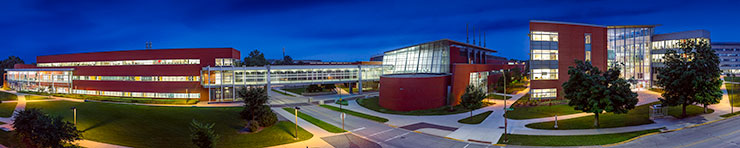
College of Engineering campus
Research drives excellence in the College of Engineering by serving as a magnet to attract and retain outstanding faculty and students. Funding opportunities relevant to the College of Engineering will be posted here. If you are interested in pursuing any of these opportunities please contact ERI at eri-pre@iastate.edu for assistance or additional information. New opportunities are posted weekly. To have the new opportunities delivered directly to your inbox please subscribe using your ISU email address. One email per week.


Maturation Initiative for Additive Metals Interchangeability (MIAMI)

America Makes

Maturation Initiative for Additive Metals Interchangeability (MIAMI)

Posted Date: April 30, 2026

Proposal Due Date: July 09, 2026

This funding opportunity supports projects that demonstrate material interchangeability by showing how a selected, moderately mature metallic additively manufactured (AM) alloy/process can replace one or multiple legacy alloys in Department of War (DoW) weapon system components. Teams will identify candidate parts and operating conditions, define performance requirements, and generate shared, pedigreed data proving the AM material meets or exceeds the critical properties of the traditional materials it aims to replace. Emphasis is on broad applicability across platforms, reduction of redundant testing, and accelerating qualification to enable drop-in substitution of AM materials for legacy alloys.

The National Center for Defense Manufacturing and Machining (NCDMM) will conduct a competitive proposal process and reserve the right to select one, multiple, or no awards in the topic areas outlined in Section 2. Proposers are welcome to submit multiple proposals. Each proposal is limited to addressing one topic area only. Maximum allowable periods of performance (PoP) are dependent upon which topic area the proposal intends to address. Proposing shorter PoPs than listed are acceptable.


Bioengineering Research Grants (BRG)

NIH

Solicitation: PAR-27-072

https://files.simpler.grants.gov/opportunities/4fa4f79e-d43d-42c9-9269- f219c7bc09df/attachments/df17417b-1461-4df7-9d22-e6db9be87c44/PAR-27-072-Full-Announcement.html

Posted Date: May 04, 2026

Proposal Due Date(s):

October 05, 2026, February 05, 2027, June 05, 2027, October 05, 2027, February 05, 2028, June 05, 2028, October 05, 2028, February 05, 2029, June 05, 2029

The goal for a bioengineering research grant (BRG) is to foster the development of an innovative technology, model, technique, design, or method that has the potential for a significant impact on biomedical research by infusing principles and concepts from the quantitative sciences.

The purpose of this NOFO is to encourage BRG applications that: 1) apply a multidisciplinary approach to the solution of a biomedical problem; and 2) integrate, optimize, validate, translate or otherwise accelerate the adoption of promising tools, methods, and techniques for a specific research or clinical problem in basic, translational, or clinical science and practice. A BRG application may propose design-directed, developmental, discovery-driven, or hypothesis-driven research and is appropriate for small teams applying an integrative approach to increase our understanding of and solve problems in biological, clinical, or translational science.


NIJ FY25 Research and Development of Innovations in Forensic Science for Criminal Justice Purposes

NIJ

Solicitation: O-NIJ-2025-172598

https://simpler.grants.gov/opportunity/33f98bde-20cf-4990-b539-c9e3f028401e

Posted Date: April 30, 2026

Proposal Due Date: June 02, 2026 by 11:59 pm ET

This NOFO supports basic or applied research and development of Innovations in forensic science for criminal justice purposes. These awards support a discrete, specified, circumscribed project that will:
1. Increase the body of knowledge to guide and inform forensic science policy and practice;
or
2. Lead to the production of useful material(s), device(s), system(s), or method(s) that have the potential for forensic application.

The intent of this program is to direct the findings of basic scientific research; foster research and development in broader scientific fields applicable to forensic science; and support ongoing forensic science research toward the development of highly accurate, reliable, cost-effective, and rapid methods for the identification, analysis, and interpretation of forensic evidence for criminal justice purposes.

NIJ seeks proposals that include robust, creative, and multi-pronged dissemination strategies that include strategic partnerships with organizations and associations that are best equipped to ensure that research findings lead to changes in policies and practices.

Enhancing material recovery and water efficiency in industrial processes

HALO / Cargill

https://www.halo.science/request_for_solutions/enhancing-starch-recovery-and-water-efficiency

Posted Date: May 04, 2026

Proposal Due Date: June 26, 2026

We seek technologies, equipment, process innovations, and digital tools that reduce yield variability during starch modification, minimize starch loss, improve recovery of starch during washing, or enable efficient washing with reduced water use or partial water reuse. Solutions that offer energy-efficient concentration are also of interest. Ideal solutions should drive cost reduction without compromising product quality through increased yield, reduced water or energy use, or lower effluent load and treatment costs.

Solutions of interest include:
  • Improved reaction control & mixing technologies reducing formation of soluble/off-spec starch (e.g., advanced mixing, dosing, inline monitoring)
  • High-efficiency starch washing & separation equipment
  • Smart equipment design improvements enhancing separation and recovery (e.g., flow distribution, inlet geometry, lamella settlers)
  • Starch fines & solids recovery from wash streams (e.g., centrifugation, membranes, flocculants, dissolved air flotation)
  • Smart process control systems or AI optimization tools (e.g., model predictive control, digital twins)
  • Water-reuse or low-water process redesign (e.g., membranes, in-process recycling, hybrid separation systems)
  • Energy-efficient dewatering and drying technologies (e.g., advanced dewatering, low-energy drying, heat integration)
  • Advanced sensors enabling real-time measurement of process indicators (e.g., solids, protein, starch, turbidity) to improve control of product functionality (e.g., viscogram by RVA)

INtegrated System for In-situ Testing & Evaluation (INSITE)

America Makes

Project Calls

Posted Date: April 20, 2026

Proposal Due Date: July, 09, 2026

Webinar: May 07, 2026 Register HERE

This funding opportunity supports projects that develop, integrate, and demonstrate a comprehensive quality assurance framework for additive manufacturing by combining in-situ process monitoring, in-situ defect detection, and post-build nondestructive evaluation (NDE). Teams will identify representative materials, processes, part classes, and generate validated data demonstrating the ability to reliably detect, characterize, and disposition defects relevant to structural performance and intended use.
Emphasis is placed on correlating in-situ data with post-build inspection results, reducing reliance on costly and time-intensive traditional NDE methods, and enabling accelerated, risk-informed inspection strategies for complex, large, or difficult-to-inspect components. The end state is a scalable, standards-informed approach that improves inspection efficiency while maintaining or enhancing confidence in part quality, with clear pathways to implementation across the defense industrial base.


Circuits and Systems for Communications and Sensing (CSCS)

NSF

Solicitation: PD 26-7564

https://www.nsf.gov/funding/opportunities/cscs-circuits-systems-communications-sensing

Posted Date: April 16, 2026

Proposals Accepted Anytime

The Circuits and Systems for Communications and Sensing (CSCS) program supports the key role of electrical engineering in future communications, sensing, circuits, and signal processing. The program’s main goal is to advance next-generation systems that integrate communication, sensing, and computation with physical domains, from the nano- to the macro-scale. CSCS covers a wide range of fields and topics, with a focus on both classical and quantum aspects. The program addresses the need for spectrum sharing and resilient connectivity. It also advances national priorities such as quantum engineering, biotechnology and artificial intelligence (AI). Ultimately, CSCS aims to create innovative solutions to spur economic growth, improve lives, and address national challenges.​

Biomedical Sensing Systems ​

CSCS supports research on sensing and imaging for health care.​ These technologies can be used to prevent, diagnose and treat diseases. Novel sensing research can advance implantable and wearable biomedical devices. It enables personalized medicine and the management of chronic illness. CSCS also invests in quantum sensors for ultra precise measurement and imaging, which promise breakthroughs in biology and medicine.

Communication Systems

CSCS research in communication systems advances 6G and beyond wireless networks and ultra high-speed internet. Research on terahertz wave and optical wave technologies offers far greater bandwidth and speed.​ Uses range from mobile communication and radar to aerospace and manufacturing. As these systems grow into intelligent ecosystems, smarter connectivity and more secure communication become possible.​ A key new area is secure quantum communication systems. CSCS supports research on quantum repeaters, entanglement distribution, and other quantum-based approaches.

Signal Processing ​

The modern world relies on signal processing. It is used in telecommunications, computational imaging, AI, and biotechnology. Signal processing involves techniques that manipulate, analyze, and optimize signals in communication and sensing systems. Techniques bridge hardware and computational algorithms to efficiently transmit, extract, and interpret data. Quantum signal processing represents a new frontier. It builds on phenomena like superposition, entanglement, and quantization to move beyond classical limits in information handling. Such methods allow signals to be processed in multiple states at once, enabling faster computation and better security. Machine learning can further improve signal processing, enabling new applications in sensing, communications, and circuit design.

Circuits and Antennas 

CSCS advances the design of compact and energy-efficient system components. These components are crucial for many parts of everyday life; they make much of today’s AI, communications, energy, transportation, health care, and robotics possible.​ CSCS aims to achieve new capabilities in circuits and antennas for future communications, sensing, AI, and quantum systems. The program’s research spans analog, mixed-signal, and radio-frequency integrated circuits. It includes heterogeneously integrated semiconductor circuits and systems. It also includes brain-inspired circuits.​ New abilities in antenna systems will improve wireless, satellite, and mobile communications; they will also enhance integrated communications, sensing, and power delivery. ​

Energy, Power, Control, and Learning (EPCL)

NSF

Solicitation: PD 26-7607

https://www.nsf.gov/funding/opportunities/epcl-energy-power-control-learning

Posted Date: April 16, 2026

Proposals Accepted Anytime

The Energy, Power, Control, and Learning (EPCL) program invests in fundamental research to advance the capabilities, performance, security and resilience of engineered systems. These advances can benefit the U.S. power grid, transportation, manufacturing, healthcare and other critical infrastructure systems that enable economic growth and prosperity.

EPCL supports research on systems and control, learning, optimization, and networked multi-agent systems. The program addresses a wide variety of systems and decision-making issues; examples include higher-level decision making, dynamic resource allocation, risk management in the presence of uncertainty, sub-system failures, and game theory for system control and learning, as well as stochastic and hybrid systems. EPCL research may also involve advances in artificial intelligence (AI); examples include novel machine learning algorithms, new AI-assisted tools, adaptive programming, and brain-like networked architectures for real-time learning.

The program encourages collaboration among different fields to advance knowledge that will lead to new methods and technologies. While projects focus on fundamental advances in knowledge, they should ideally provide a clear vision of how research can influence real-world applications. These may include energy, transportation, robotics, biomedical devices and systems, or other uses.

EPCL is committed to supporting advances in the theory and technology of electric power systems. Such research can address issues related to generation, transmission, storage, inverter-based energy sources; power electronics and drives; battery management systems; energy harvesting; hybrid and electric vehicles; and the interplay of power system operation with regulatory and economic structures and consumer behavior. The program also supports research that addresses emerging challenges stemming from societal trends in energy production and consumption, such as changes in energy sources for the power grid or growth in data centers.

Electronic, Photonic, Magnetic, and Quantum Devices (EPMQD)

NSF

Solicitation: PD 26-1517

https://www.nsf.gov/funding/opportunities/epmqd-electronic-photonic-magnetic-quantum-devices

Posted Date: April 23, 2026

Proposals Accepted Anytime

The Electronic, Photonic, Magnetic, and Quantum Devices (EPMQD) program supports fundamental research on devices with new and/or enhanced capabilities based on their structure and material properties. EPMQD’s goal is to expand the frontiers of micro-, nano- and quantum- devices. Innovations will advance artificial intelligence, computing, communications, healthcare, energy, manufacturing, and other domains. The program encourages research based on emerging ideas for miniaturization, integration, and energy efficiency.

Electronic devices

The EPMQD program supports research on semiconductor and other electronic devices. These include transistors; photodiodes; power generation devices; power switching devices; light-emitting devices; display devices; physical and chemical sensing devices; actuators; and multifunctional devices. Proposals should emphasize aspects such as design, theory, simulation and modeling, fabrication, and scaling. Proposals may use  machine learning to advance the research. Devices of interest include those comprised of crystalline, thin-film, amorphous, and organic/hybrid/perovskite semiconductors.

Photonic devices

The EPMQD program supports research in light–matter interactions; it also supports research on the principles, materials, devices, and architectures that enable photonic and optically mediated technologies. The program emphasizes discovery and understanding of underlying physical mechanisms—spanning classical, optical, and quantum regimes—and translates that into novel devices, components, sensors, and systems. Areas of interest include photonics; plasmonics; polaritonics; nonlinear and ultrafast optics; nanophotonics; and photon–phonon interactions, as well as new capabilities in imaging, sensing, computing, and communications.

Magnetic and/or highly-correlated devices

The EPMQD program funds research on novel devices, components, and systems that use magnetic, superconducting, topological, and other highly-correlated materials. These can be new devices to push traditional limits, enabling high-speed, low-power computing, sensing and communication operations, and secure quantum communication.

Quantum devices

The EPMQD program advances next-generation quantum technologies with electronic, photonic, and magnetic devices. It prioritizes reliable, scalable, and integrated systems that offer robust performance, ease of manufacturing, and interoperability. The program aims to create quantum devices and platforms that operate in real-world environments.

Improving maintenance and uptime of agricultural machinery fleets

Halo / Bayer Corp.

https://www.halo.science/request_for_solutions/maintenance-and-repair-of-agricultural-machinery-fleets

Posted Date: April 24, 2026

Proposal Due Date: June 12, 2026

We are looking for ways to improve the use, maintenance, and uptime of agricultural machinery fleets, particularly in the context of managing diverse, multibrand equipment and accessing reliable technical support. The ideal partner would enable reliable, multibrand technical support, including repair, preventive or predictive maintenance, and guidance on proper equipment use. While partners offering an end-to-end solution would be ideal, we welcome technologies addressing specific components of the challenge that can be combined into a broader approach. We are seeking partners based in Brazil or willing to establish operations locally. Bayer is open to collaborating closely, including supporting business model development, connecting with manufacturers, and piloting solutions in real-world conditions.

Solutions of interest include:
  • Multibrand repair and field service with defined service levels (SLAs)
  • Preventive and predictive maintenance tools for mixed fleets
  • Digital tools for maintenance planning, tracking, and alerts
  • Remote diagnostics for mechanical, electronic, or software issues
  • Training solutions for proper equipment use and upkeep
  • Fleet management software for equipment use and location
  • Technician dispatch and repair coordination platforms
  • Equipment rental or managed fleet models
  • Repair referral or assistance network models

Biomanufacturing of transformational ingredients in consumer-packaged goods

Halo / P & G

https://www.halo.science/request_for_solutions/biomanufacturing-of-ingredients

Posted Date: April 27, 2026

Proposal Due Date: June 26, 2026

We are looking for approaches to engineer and optimize organisms (microbial and plant) for production and/or purification of relevant biomolecules in a non-trial-and-error format. It is believed that starting from a waste stream will be a more cost-effective solution. We are also interested in plant- or algae-based solutions that are scalable and cost effective.

Solutions of interest include:
  • Downstream processing methods/technologies that facilitate continuous extraction and/or re-use of extractive reagents
  • Approaches that leverage feedstocks separate from the food chain
  • Strain engineering approaches that achieve target molecule production targets across multiple molecule classes in significantly less time versus the industry average
  • Host engineering capabilities in non-model systems
  • Scale up platforms/methods that are amenable to commodity scale ingredients

View All Opportunities

Log in to view more

Use your ISU netid to view our opportunities.

Copyright © 2026 · Iowa State University of Science and Technology. All rights reserved.